


Go With the FLOE: How Polar Bears Stay Steady When Life Keeps Shifting Beneath Them
December 17, 2025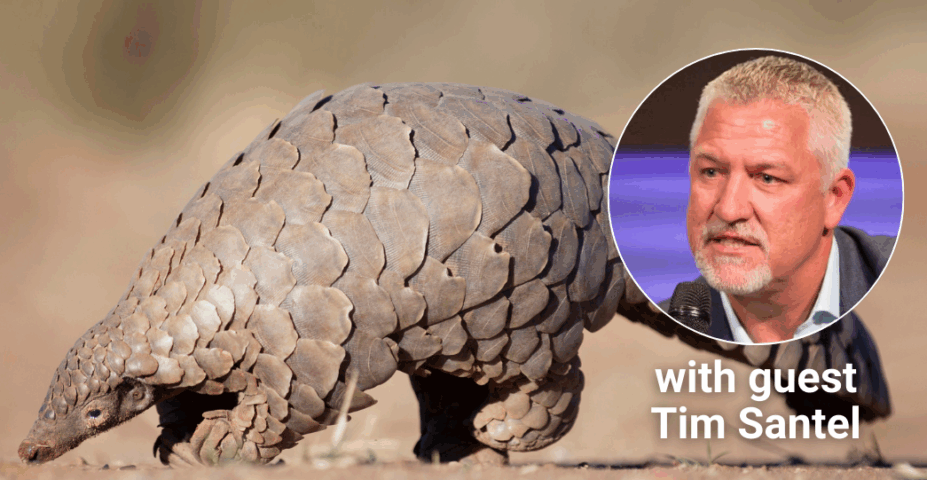
Podcast: Play in new window | Download
Episode 67
Evolving Your Armor in an Ever-Changing World: What Pangolins Teach Us About Updating Protection and Accepting Help
Guest: Tim Santel, Retired Special Agent in Charge (SAC), U.S. Fish & Wildlife Service Office of Law Enforcement; Senior Advisor & Media Relations Director, Focused Conservation
What if the very thing that once protected you… is the thing that’s now keeping you stuck? And what happens when the world changes faster than your instincts can?
In this episode of Resilience Gone Wild, host Jessica Morgenthal takes us into the moonlit grasslands of Botswana, following the quiet, deliberate life of the pangolin—a living fossil with nature’s most powerful mammal armor. For more than 60 million years, the pangolin’s perfect defense was simple: curl into an unbreakable ball and wait out danger.
Then humans changed the rules.
Today, pangolins are the most trafficked mammals on Earth. Their scales—made of keratin, the same material as human nails and hair—are sold under false claims of medicinal power, and their meat is treated as a luxury. In a single human generation, the pangolin’s ancient protection became its vulnerability.
Jessica pairs this story with a gripping, grounded interview with Tim Santel, one of the most experienced wildlife trafficking investigators in U.S. history. Tim takes us inside the real-world mechanics of trafficking networks—how wildlife is moved like any other commodity, and why weak penalties and low enforcement capacity make illegal wildlife trade so attractive to criminal syndicates.
The resilience lesson is both tender and urgent: we all carry armor built for earlier seasons of life. Some of it still protects. Some of it now constricts. And sometimes resilience means doing the opposite of what we’ve always done—opening instead of closing, seeking new protection instead of relying only on the familiar.
Episode Overview
The episode opens in Botswana, tracing a pangolin’s sensory world—smell, vibration, memory, instinct—and the intelligence of a creature shaped by time. We learn how pangolins live, how they nurture their young, how they “read” the land, and how their scales evolved into the most formidable natural armor carried by any mammal.
Then the story turns: when human trafficking enters the ecosystem, the pangolin’s perfect curl—once a masterpiece—becomes an easy handle for capture and transport. Jessica reframes this as a human mirror: the coping strategies we built to survive earlier threats may not match the threats we face now.
Jessica welcomes Tim Santel to explore what it takes to protect species whose defenses can’t keep up with rapidly evolving human systems. Tim shares his path into wildlife law enforcement, the “voice for wildlife” moment that guided his career, and what he’s learned from decades of investigations into trafficking networks—from pangolin scales to rhino horns and beyond.
The episode closes with two practical reflection practices to help listeners reassess their own protections, and a call to action to support conservation organizations and on-the-ground enforcement efforts working to keep pangolins—and countless other species—from disappearing.
What You’ll Learn
- Why the pangolin’s greatest protection became its greatest vulnerability in a human-shaped world
- How “armor” shows up in our lives (withdrawing, micromanaging, bracing, overworking) and when it stops serving us
- What global wildlife trafficking networks have in common with other criminal trades—and why wildlife is so profitable
- The real cost of treating living beings as commodities
- Why awareness alone isn’t enough—and why frontline teams matter
- How to update your internal protections with intention, clarity, and courage
- Two practices for examining what still protects you… and what now constricts you
- How attention becomes action—and why action becomes hope
Episode Highlights
[00:00] A moonlit pangolin in Botswana—and the question of protection
[02:17] “A new season is opening…” and why this story feels personal
[02:45] Pangolins as living fossils: lineage, mothering, and the world of scent
[05:11] Intelligence as awareness: tremors, heat, memory maps, and escape artistry
[07:34] The quiet architecture of termite mounds—and the pangolin’s role in soil health
[10:01] When humans arrive: trafficking, false beliefs, and endangered collapse
[12:22] The resilience lesson: protections that once served us can later constrict us
[14:58] Welcome Tim Santel: protecting species that can’t protect themselves
[30:48] “When wildlife dies, it doesn’t make a sound…”
[39:39] Why wildlife trafficking is low risk, high profit—and the convergence of criminal networks
[45:46] Pangolins: docile, ancient, and tragically easy to capture
[48:16] The scale of the trade: what thousands of kilos really means
[50:06] Operation Crash: how value multiplies through trafficking layers
[55:41] What helps most: supporting the frontline, not just online opinions
[01:01:47] Closing reflections: two practices to update your protections—and how to help pangolins now
Meet the Guest
Tim Santel is a passionate, results-driven conservation professional with more than 32 years of experience leading some of the most significant criminal investigations into illegal wildlife trafficking in U.S. history. As the retired Special Agent in Charge (SAC) of the Special Investigations Unit for the U.S. Fish & Wildlife Service Office of Law Enforcement, Tim led elite investigative teams combating global wildlife trafficking and transnational organized crime—protecting some of the world’s most endangered species.
Today, Tim continues that work as a Senior Advisor and Media Relations Director with Focused Conservation, supporting wildlife crime units across Africa and strengthening real enforcement capacity on the ground.
Tools, Frameworks, or Strategies Mentioned
- The Pangolin Mirror: noticing when old protections no longer match current threats
- Update Your Armor Practice #1: revisit one old protection and ask what danger it once served
- Update Your Armor Practice #2: identify a new threat and name a new protection
- “Attention → Care → Action” as a resilience pathway
- Conservation and enforcement capacity-building as collective resilience in action
Closing Insight & CTA
“Sometimes resilience means opening instead of closing.”
If today’s episode opened something in you—clarity, tenderness, courage, or a new willingness to reassess your own armor—please follow, rate, and review Resilience Gone Wild. And share this episode with someone who might need permission to evolve their protections too.
Resource Links
Named in the episode for saving pangolins:
- Focused Conservation – https://focusedconservation.org
- Tim’s blog post on pangolin rescue: https://focusedconservation.org/2025/12/09/operation-holy-night-rescuing-pangolins-and-disrupting-trafficking-networks-in-nigeria/
- U.S. Fish & Wildlife Service – https://www.fws.gov
- Pangolin Crisis Fund (PCF) – pangolincrisisfund.org
- World Wildlife Fund (WWF) – worldwildlife.org
- Save Pangolins: savepangolins.org
Other organizations working to save pangolins:
- Wildlife Crime Prevention (WCP): https://www.wildlifecrimeprevention.com/pangolin-project/
- Short film: A Love Like Ours is Rare: youtube.com/watch?v=tA67uPrU440
- Film: Kulu’s Journey: discoverwildlife.com/tv/how-to-watch-pangolin-kulus-journey
- Wildlife Conservation Society (WCS): wcs.org
- Pangolin Conservation and Research Foundation (PCRF): pangolincrf.org
- David Shepherd Wildlife Foundation (DSWF): davidshepherd.org/species/pangolins/how-we-help/
Resilience Gone Wild – ResilienceGoneWild.com
Listen to more episodes – pod.link/1765376951
Produced by Balancing Life’s Issues (BLI Studios): balancinglifesissues.com/podcast-bli/